The primary functions of a plate rolling machine
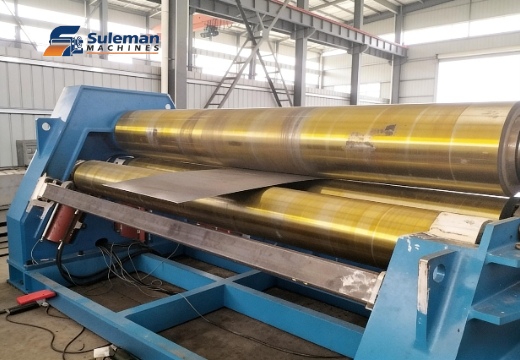
A plate rolling machine is a forming machine tool that performs continuous spot bending on sheet metal. Typically, when using a symmetrical three-roll plate rolling machine, a fixed width of dead edge is left at both ends of the sheet material during rolling. After forming the cylinder, the pre-bending function serves to eliminate these dead edges, merging them into the cylinder. Workpieces rolled by the plate rolling machine often feature straight edges at both ends, necessitating welding before further rolling—a time-consuming process that reduces work efficiency.
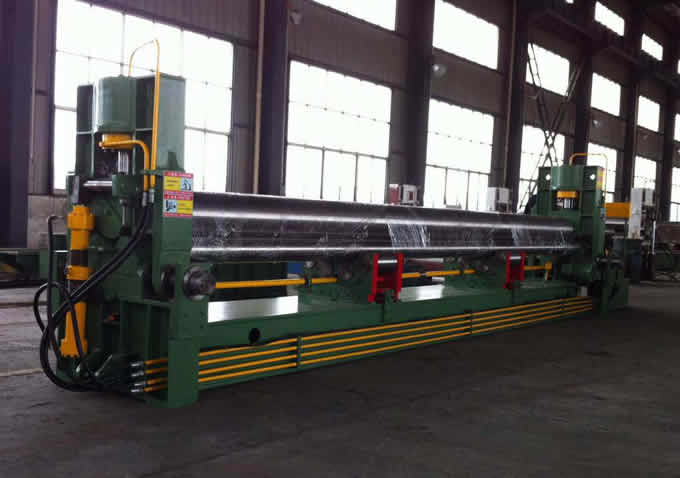
Principal components of the plate rolling machine:
(1) Upper and lower rolls: Critical components forged from carbon steel.
(2) Frame assembly: Comprising left and right frames, each housing the lower roll bearing. Internally, the frame houses a square-threaded lead screw. The upper end of this screw is hinged to the bearing housings at both ends of the upper roll. Below, a worm gear and worm wheel assembly is fitted. Rotation of the nut within the worm gear causes the upper roll to ascend or descend.
(3) Gear reducer: Mounted alongside shims on a channel steel base plate.
(4) Roll Bending Machine Unloading Device: Mounted on the gear reducer side to balance the upper roll during unloading; unloading and reset functions are performed by a hydraulic cylinder.
(5) Base: Fabricated by welding structural steel and steel plates. The frame, gear reducer, motor, and other components are mounted upon it to form an integrated assembly.
(6) Electrical Components: All components are housed within a control cabinet for convenient operation.
The rolling machine's electrical control system comprises an electrical control cabinet, operating console, and power supply. The main switch incorporates short-circuit protection and overload protection for the main motor. Motor forward/reverse rotation is controlled by AC contactors; the control circuit employs relay control for reliable operation and extended service life. The console features finished product control buttons and indicator lights to manage overall machine operation and monitor working status.
Rolling machine products are extensively employed in boiler manufacturing, shipbuilding, petroleum, carpentry, metal structures, and other mechanical engineering sectors. As a specialised machine, the rolling machine holds a significant position in fundamental industrial processing. Virtually all steel forming into cylindrical shapes is achieved through rolling machine rollers. It finds application across various fields including automotive and military industries. According to differing requirements, it can roll steel columns to meet specific specifications, rendering it a highly effective piece of equipment.
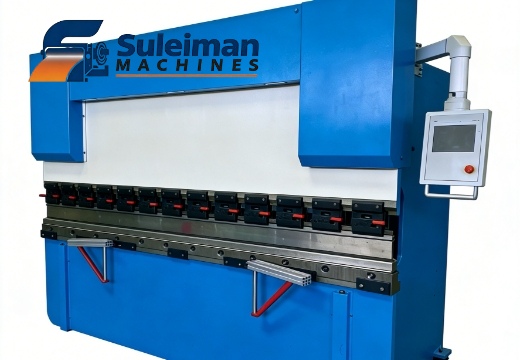 Bending on a Budget: Why the Torsion Bar CNC Press Brake is Still the ROI King
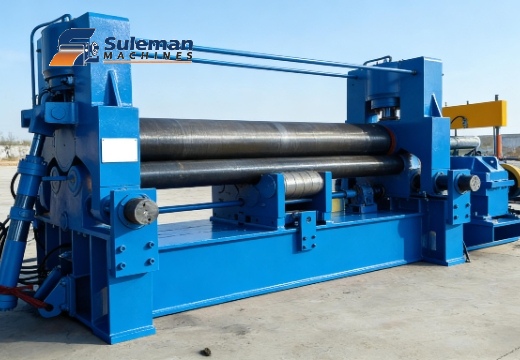 Why Wind Power Projects Demand "Universal" 3-Roll Plate Rollers
 he "Max Thickness" Trap: Why Your 20mm Plate Roller is Failing Your 16mm Jobs